


The person every workplace depends on
There is a certain kind of person every workplace seems to depend on.
You probably know one.
Or perhaps you are one.
They are the ones who stay calm when things get messy. The ones who do not need to be chased. The ones who get things done, hold things together, and step in without being asked too many times. When pressure rises, people feel better when they are around. When something goes wrong, their name is often the first that comes to mind.
From the outside, they look strong. Capable. Steady. Trusted.
And because of that, very few people stop to ask what it feels like to be that person all the time.
When reliability becomes identity

At first, being the reliable one feels good. It builds trust. It creates opportunities. It becomes part of your reputation. People notice that you can handle complexity, that you do not panic easily, that you keep moving when others get overwhelmed. Over time, that reliability becomes something others begin to lean on without even thinking about it.
You become the safe pair of hands.
The challenge is that being reliable does not only change how others see you. It changes how you begin to see yourself.
You start to believe that you should be able to handle more than other people. You tell yourself that pressure is just part of growth. You become used to being the one who absorbs tension, translates ambiguity, manages emotions, and carries the invisible things that help everything else function. You do not complain much because there is always someone who seems to be struggling more visibly. You do not always ask for support because you have become so used to being the support.
And so something subtle happens.
The role you play for others becomes the role you struggle to step out of for yourself.
The struggle that stays hidden

That is when the difficulty begins.
Not in a dramatic way. Not all at once. More often, it arrives quietly.
Work still gets done. Meetings are still attended. Deadlines are still met. On paper, nothing looks alarming. But underneath that visible competence, something starts to feel heavier than it used to. Things that once felt manageable begin to feel draining. Decisions take more energy. Patience becomes thinner. The sense of meaning that once sat naturally inside the work becomes harder to access. You keep showing up, but you no longer feel as connected to what you are carrying.
What makes this particularly difficult is that the outside world usually rewards the exact behavior that is wearing you down.
The more composed you appear, the more responsibility seems to arrive. The more dependable you are, the less likely people are to wonder if you are close to capacity. The more often you say yes, the more natural it becomes for everyone around you to assume that yes is still available.
And because you have built part of your identity around being dependable, saying no does not just feel difficult. It can feel like a betrayal of who you have always been.
Why high performers rarely look like they are struggling
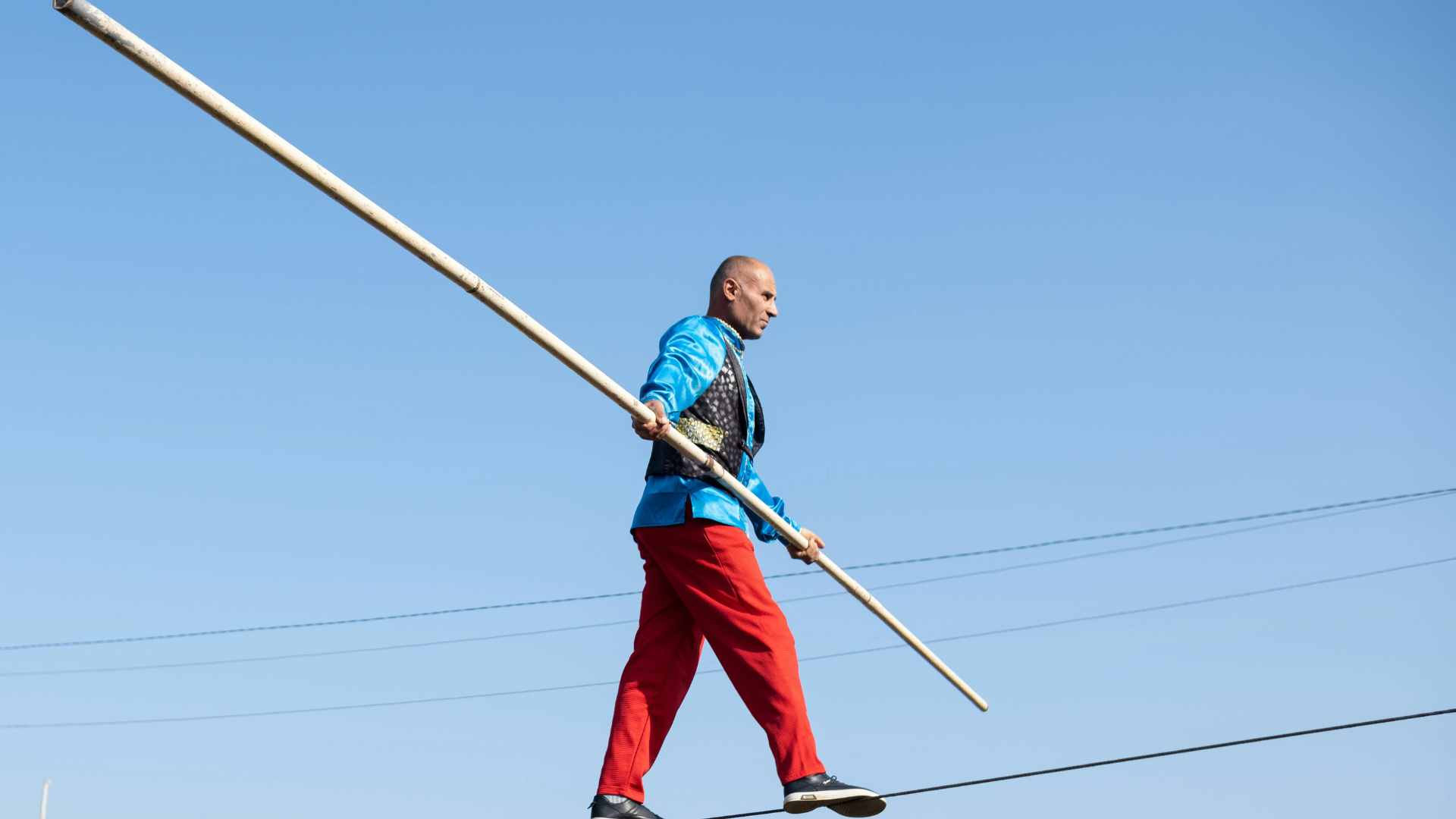
That is why so many high-performing professionals do not reach a breaking point in obvious ways. They do not always collapse. They do not always step away. Many simply continue, while feeling less and less present in the life they are sustaining.
This is especially true for people moving into bigger roles.
A strong individual contributor becomes a manager. A manager becomes the person others depend on emotionally. A founder becomes the person who must hold vision, uncertainty, and pressure all at once. A senior professional becomes the one who must appear certain, even when the road ahead is not clear.
What they are carrying may change, but the pattern is often the same.
They keep being the one others can rely on.
And slowly, they forget to ask what they themselves rely on.
When capability hides misalignment

There is also another layer to this that is easy to miss. Sometimes the pressure is not only about workload. Sometimes it is about misalignment. Sometimes the person who is carrying everything so well is no longer fully connected to the direction they are walking in.
They are doing what they have always done. They are good at it. Others value them for it. But privately, something feels increasingly off. Not because they have failed, but because they have changed. The role still fits the old version of them, perhaps even the successful version of them, but not necessarily the current one.
That can be a difficult truth to admit.
It is much easier to keep performing competence than to sit with the quieter question underneath it all.
Is this still right for me?
Is this how I want to keep living and working?
Have I become so good at carrying this that I have stopped noticing what it costs me?
The moment the question changes
These are not easy questions, especially for people who are used to functioning well. High performers are often excellent at solving problems, but much less practiced at creating space to examine themselves with the same honesty. They know how to push through. They know how to adapt. They know how to be useful. What they do not always know is how to pause before usefulness turns into depletion.
And that is often where a real shift begins.
Not with a crisis.
Not with a dramatic life change.
But with enough stillness to hear the truth more clearly.
Sometimes that truth is simply that the current way of coping is no longer working. Sometimes it is the realization that what once felt like strength has slowly become a pattern of overextension. Sometimes it is the recognition that being relied on by everyone else has left very little room to ask what you actually need.
That kind of recognition can be uncomfortable. But it can also be deeply clarifying.
Because once you see it, the question changes.
It is no longer just, “How do I keep doing all of this?”
It becomes, “What kind of relationship do I want to have with responsibility from here?”
That is a different question entirely.
A different kind of growth
It opens the door to a different kind of growth. Not the kind built on carrying more, proving more, or becoming even more efficient at holding everything together. But the kind built on honesty, boundaries, reflection, and a willingness to stop performing steadiness long enough to discover what steadiness might actually look like if it were sustainable.
This is one reason coaching matters so much for capable people.
Not because they are weak.
Not because they need fixing.
And not because they are failing.
But because the people who are most trusted by others are often the least likely to have a space where they do not need to hold the same role. A good coaching conversation does not remove responsibility. It does something more important. It gives someone room to step outside the role they have been performing and listen more carefully to what is true for them now.
Sometimes that is all a person needs at first.
A little less performance.
A little more honesty.
A little more room to think clearly.
Final thought
The people everyone relies on are often admired for how much they can carry. But carrying a lot is not the same as being supported. Looking composed is not the same as feeling clear. Being capable is not the same as being well.
And perhaps that is the part worth remembering.
The strongest-looking people in the room are not always the ones who need the least care. Sometimes they are simply the ones who have had the most practice hiding the weight.
If you are that person, the invitation is not to become less reliable. It is to become more truthful with yourself about what reliability has come to mean in your life.
Because there is a difference between being someone others can count on and becoming someone who has forgotten how to stop carrying everything alone.
And sometimes the most important next step is not doing less.
It is finally allowing yourself to ask what this way of doing more has been asking of you all along.
Coach on Tap
At Coach on Tap, many conversations begin with people who are doing well on the outside but sense that something underneath needs attention, reflection, or change.
Because sometimes the people who seem the strongest are simply the ones who have had the least space to stop and think.

Coach on Tap